Artikel: The Story of the Game That Conquered Kings: How Chess Was Born
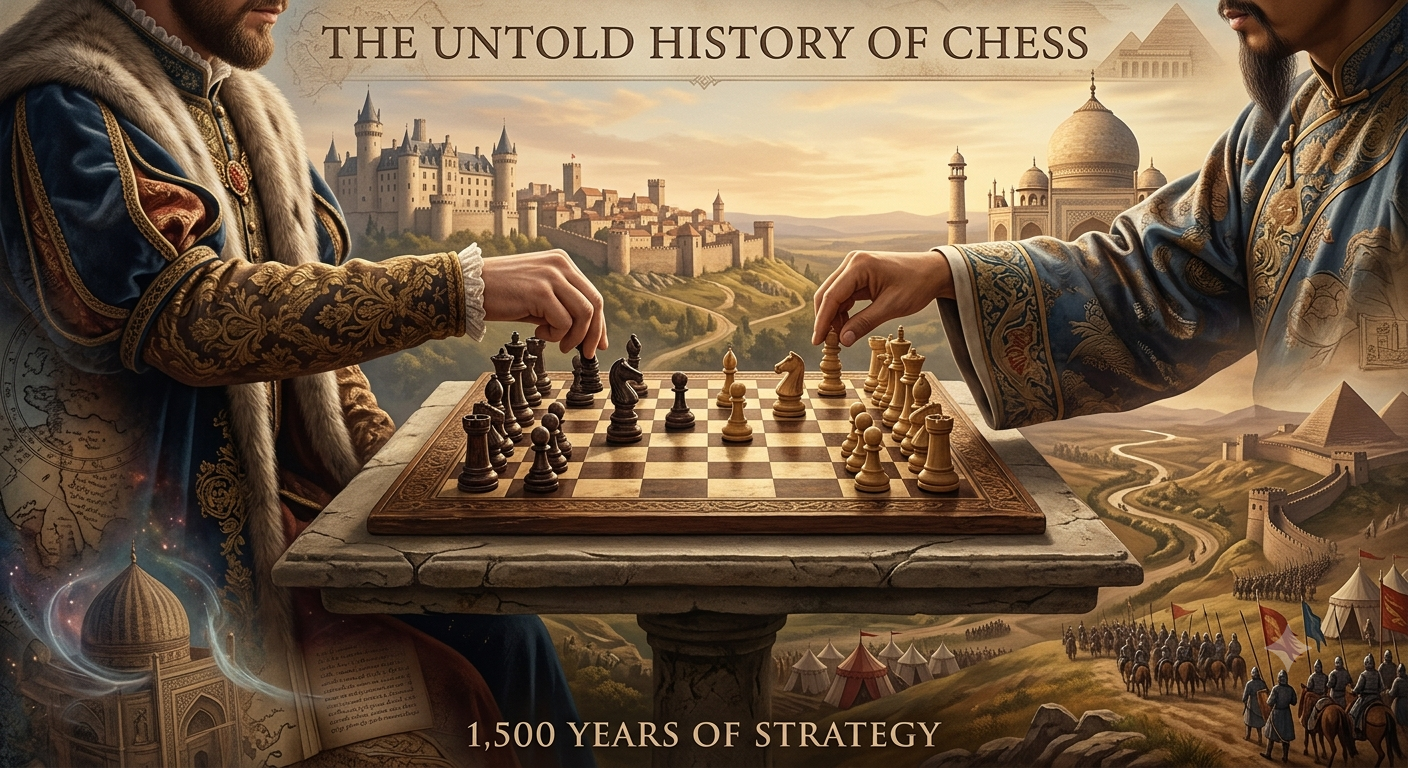
The Story of the Game That Conquered Kings: How Chess Was Born
Think chess is just a boring board game for grandfathers in the park? Think again.
Long before it became a global sport, chess was a tool of war, a secret weapon of emperors, and a dangerous passion.
It All Started with a Legend
Around the 6th century AD, in ancient India, a clever sage invented a game called Chaturanga. Translated as "Four Divisions of the Military," it mimicked a real battlefield: infantry (pawns), cavalry (knights), elephants (bishops), and chariots (rooks).
Legend has it that the local King was so amazed by the game that he offered the inventor any reward he wanted. The sage simply asked for grains of wheat: one grain on the first chessboard square, two on the second, four on the third, doubling each time.
The King laughed at the "modest" request — until his mathematicians calculated the total: 18 quintillion grains. That was more wheat than the entire planet could produce in centuries! The King realized: this game is far deeper than it looks.
From Persian Palaces to European Thrones
From India, the game traveled along trade routes to Persia, where it became known as Shatranj. It was here that players started shouting "Shah Mat!" when defeating the king — a phrase we still use today as "Checkmate!" (literally meaning "The King is helpless").
When chess reached medieval Europe around the 10th century, it underwent a quiet revolution. Knights, kings, and nobles became obsessed with it. But the biggest change happened in the 15th century: the Queen became the most powerful piece on the board. Many historians believe this upgrade was inspired by strong female rulers of the era, like Queen Isabella of Castile.
Why We Still Play It 1,500 Years Later
Chess survived the fall of empires, plague outbreaks, and industrial revolutions. Why? Because every single game is a unique story. After just four moves on each side, there are over 318 billion possible board positions.
Chess isn't just about strategy — it’s about patience, respect, and mastering your mind.
Next time you set up the board, remember: you’re not just playing a game. You’re stepping into a 1,500-year-old royal tradition.

Von Yuliia Natsyk